
1-855-957-8378
Benefab®
Cart 0
  • Home
  • Shop

    Horse Products 17

    People Products 7

    Dog Products 5

    Bundles 5

  • Press
  • Blog
  • Pre-Loved
  • Dealers
  • Wishlist
  • Account
My Account
Log in Register
Australia (AUD $)
Belgium (EUR €)
Canada (CAD $)
Costa Rica (CRC ₡)
Czechia (CZK Kč)
France (EUR €)
Germany (EUR €)
Italy (EUR €)
Japan (JPY ¥)
New Zealand (NZD $)
United Kingdom (GBP £)
United States (USD $)
English
Benefab®
  • Shop

    Horse Products 17

    People Products 7

    Dog Products 5

    Bundles 5

  • Press
  • Blog
  • Pre-Loved
  • Dealers
Account Wishlist Cart 0

Search our store

Benefab®
Account Wishlist Cart 0
Home / Blog
Blog

Club Foot in Horses: Answers to Your Questions

Apr 18, 2024
Club Foot in Horses: Answers to Your Questions

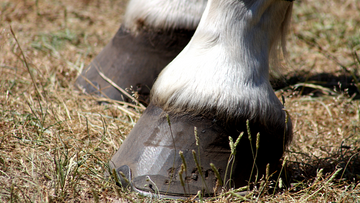
Club foot is a condition affecting a horse’s hoof. A horse suffering from club foot has a steeper angle between the hoof wall and the ground, which causes the horse to stand on its toes. Horses can develop club foot in one front hoof or both.

Degrees of Club Foot (Grade 1-4)

Veterinarians classify club foot by four degrees:

Grade 1 – Mild club foot, the slightly steeper angle between the hoof wall and ground

Grade 2 – Moderate club foot, angle is more pronounced

Grade 3 – Severe club foot, the angle is steep, the horse stands on the toe

Grade 4 – Most severe club foot, horse cannot place hell on the ground

Causes and Risk Factors

Overall, veterinarians do not fully know the cause of clubfoot in horses. However, it is a combination of genetics and environment. Other potential factors include poor nutrition throughout pregnancy. Additionally, injury to the foot can lead to club foot development.

What Causes a Club Foot?

Congenital Club foot has some genetic factors. Foals can be born with club foot. The hoof can grow abnormally if the tendons and ligaments are not appropriately balanced.

Acquired Nutritional Problems

Bad nutrition can result in club foot. If a horse consumes a diet deficient in certain nutrients, the hoof can develop an abnormal growth pattern.

Mechanical Issues/Posture

Improper shoeing and trimming can result in clubfoot. Clubfoot is caused by an imbalance of tendons and ligaments, which can be exacerbated by poor posture.

Treatment Options

Corrective Farriery

The farrier can trim the hoof to help balance a club foot. Combining shoeing and trimming methods can help reduce the issues of a club foot. Working with an experienced farrier can give your horse the most comfortable life.

Surgical Interventions

Veterinary surgeons can help more severe cases of clubfoot. They will look to cut a tendon that runs from the back of the knee to the foot. This relieves tension and corrects the angle of the hoof.

Famous Horses with Club Feet

Several famous horses have suffered from club foot, including:

  • Secretariat
  • Snowman
  • Barbaro

Frequently Asked Questions

What is a Club Foot on a Horse?

Club foot is a condition where the angle between the hoof wall and the ground is steeper than it should be.

Can Horses with Club Foot be Ridden?

Depending on the grade of the club foot, your horse can still be ridden. Horses suffering from grade 1 or 2 club foot are still mild enough that you can ride them. More severe cases of club foot can lead to pain and lameness.

Is Club Foot in Horses Genetic?

Some breeds are more prone to club foot than others. Overall, Thoroughbreds and Standardbreds are more prone to this condition. However, not all cases of clubfoot are caused by genetics.

How do you trim a club-footed horse?

Trimming a club-footed horse takes a lot of experience. Avoid trimming the heel too aggressively to avoid soreness. Overall, balancing the hoof should be your primary goal.

How Do You Know If Your Horse Has Club Foot?

Look to see how your horse is standing. A horse with a club foot will lean towards his toes. Additionally, you may note uneven hoof growth.

How Serious is Club Foot?

Club foot is a condition with four levels of severity. In its mild forms, it is not a severe issue. However, if left untreated, it can cause severe pain, gait issues, and hoof deformities.

Previous
7 Benefits of Drinking Hot Water
Next
Dog Massage Therapy: The Benefits & Tips

Related Articles

What Does a Warm-up Cough Mean for Your Older Horse?
March 09, 2026

What Does a Warm-up Cough Mean for Your Older Horse?

It’s common for older horses to cough once or twice at the beginning of a...
Read more
Dog Colic: Symptoms, Causes, and When to Call a Vet
March 02, 2026

Dog Colic: Symptoms, Causes, and When to Call a Vet

Dog colic is more than just a simple stomach ache—it can signal anything from mild...
Read more
Manure Management: Comprehensive Guide to Cleaning Your Horse Property
February 23, 2026

Manure Management: Comprehensive Guide to Cleaning Your Horse Property

Spring is the ideal time to reset horse care routines after winter. From manure management...
Read more
Bot Fly Larvae in Horse Manure: What to do now
February 16, 2026

Bot Fly Larvae in Horse Manure: What to do now

Bot fly larvae in horse manure are a common seasonal sign of bot fly infestation....
Read more

Recent Posts

What Does a Warm-up Cough Mean for Your Older Horse?
Dog Colic: Symptoms, Causes, and When to Call a Vet
Manure Management: Comprehensive Guide to Cleaning Your Horse Property
Bot Fly Larvae in Horse Manure: What to do now
Canine Hydrotherapy For Dogs
Common Injuries in Show Cattle: Prevention and Treatment
Why Your Dog Keeps Sneezing (and Easy Home Remedies That Help)
Should You Mount from the Ground or Use a Mounting Block?
Understanding and Managing Coronet Band Abscesses in Horses
What Dog Owners Need to Know About the Most Aggressive Dog Cancer

Focused &
Durable Designs

Products made specifically for you and your pets.

Free U.S. Shippingon All Orders over $200

We have you covered.

We Back Our
Products 100%

It's our customer promise.

BRAND PARTNERS

  • Become a Dealer
  • Become an Affiliate
  • Become a Registered Nonprofit
  • Logins for Dealer
  • Logins for Affiliate
  • Affiliate Resources
  • Meet our Ambassadors

CUSTOMER SERVICE

  • Contact
  • Shipping
  • Privacy Policy
  • Terms of Service
  • Money Back Guarantee
  • Warranty & Return Policy
  • Medical / Brand Disclaimer
  • FAQs

ABOUT BENEFAB

  • Why Choose Benefab?
  • The Benefab Story
  • Parables Podcast
  • Our Sister Brands
  • Media Inquiries
  • Blog
© 2013 -2025 Benefab®. Property of the Naar Boven Corporation. All rights reserved.
Payment options:
  • American Express
  • Apple Pay
  • Bancontact
  • Diners Club
  • Discover
  • Google Pay
  • Mastercard
  • PayPal
  • Shop Pay
  • Visa

Confirm your age

Are you 18 years old or older?

Come back when you're older

Sorry, the content of this store can't be seen by a younger audience. Come back when you're older.