



 Last week, we explained the movement of your horse’s ears and what these different positions mean. This week, we will be discussing your horse’s eyes. The eyes are another extremely important body part. However, this can be a little more difficult to read than the ears are. You must be observant and look closely at your horse to understand how to read your horse and what they are telling you when looking at their eyes.
Eyes
A large, dark, kind eye
• This is an expression that is used somewhat frequently in the horse world (especially the judging world!). A large, dark, kind eye is ideal in a horse. This shows that the horse is very relaxed and comfortable with where he is. The horse is confident.
A bug-eyed look
• A horse that has a relaxed body language and but has a bug-eyed look can be considered an explosive horse. A bug-eyed look would be considered a wide-open eye – open to the point where you can see the top of the eye. This look can mean that your horse is very sensitive.
A larger eye
• A large eye means an alert horse. When the top of the eye gets bigger, the horse is alarmed or worried about something.
A smaller eye
• An angry horse will usually have a smaller eye. This is something that is hard to notice and really isn’t too common. This is generally seen in stallions and horses that fight. If you see the skin under the lower lid wrinkle, this horse is extremely angry.
Eyes can be one of the more difficult signs to read. Start by paying attention to the eye signs in association with the ears, tail, etc. This will make it easier for you to learn and eventually, you will be able to read your horse from just their eyes!
Next week, we will go over horse’s tails and their signs. Be sure to keep up with our blogs to read the full series!
For more information on eye movements/signs, visit: http://americashorsedaily.com/how-to-read-your-horse-part-2/#.VIppzGRDtgo
Last week, we explained the movement of your horse’s ears and what these different positions mean. This week, we will be discussing your horse’s eyes. The eyes are another extremely important body part. However, this can be a little more difficult to read than the ears are. You must be observant and look closely at your horse to understand how to read your horse and what they are telling you when looking at their eyes.
Eyes
A large, dark, kind eye
• This is an expression that is used somewhat frequently in the horse world (especially the judging world!). A large, dark, kind eye is ideal in a horse. This shows that the horse is very relaxed and comfortable with where he is. The horse is confident.
A bug-eyed look
• A horse that has a relaxed body language and but has a bug-eyed look can be considered an explosive horse. A bug-eyed look would be considered a wide-open eye – open to the point where you can see the top of the eye. This look can mean that your horse is very sensitive.
A larger eye
• A large eye means an alert horse. When the top of the eye gets bigger, the horse is alarmed or worried about something.
A smaller eye
• An angry horse will usually have a smaller eye. This is something that is hard to notice and really isn’t too common. This is generally seen in stallions and horses that fight. If you see the skin under the lower lid wrinkle, this horse is extremely angry.
Eyes can be one of the more difficult signs to read. Start by paying attention to the eye signs in association with the ears, tail, etc. This will make it easier for you to learn and eventually, you will be able to read your horse from just their eyes!
Next week, we will go over horse’s tails and their signs. Be sure to keep up with our blogs to read the full series!
For more information on eye movements/signs, visit: http://americashorsedaily.com/how-to-read-your-horse-part-2/#.VIppzGRDtgo
Blog
How To Read Your Horse - Eyes
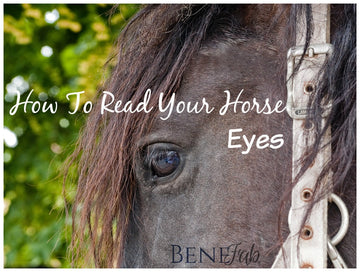 Last week, we explained the movement of your horse’s ears and what these different positions mean. This week, we will be discussing your horse’s eyes. The eyes are another extremely important body part. However, this can be a little more difficult to read than the ears are. You must be observant and look closely at your horse to understand how to read your horse and what they are telling you when looking at their eyes.
Eyes
A large, dark, kind eye
• This is an expression that is used somewhat frequently in the horse world (especially the judging world!). A large, dark, kind eye is ideal in a horse. This shows that the horse is very relaxed and comfortable with where he is. The horse is confident.
A bug-eyed look
• A horse that has a relaxed body language and but has a bug-eyed look can be considered an explosive horse. A bug-eyed look would be considered a wide-open eye – open to the point where you can see the top of the eye. This look can mean that your horse is very sensitive.
A larger eye
• A large eye means an alert horse. When the top of the eye gets bigger, the horse is alarmed or worried about something.
A smaller eye
• An angry horse will usually have a smaller eye. This is something that is hard to notice and really isn’t too common. This is generally seen in stallions and horses that fight. If you see the skin under the lower lid wrinkle, this horse is extremely angry.
Eyes can be one of the more difficult signs to read. Start by paying attention to the eye signs in association with the ears, tail, etc. This will make it easier for you to learn and eventually, you will be able to read your horse from just their eyes!
Next week, we will go over horse’s tails and their signs. Be sure to keep up with our blogs to read the full series!
For more information on eye movements/signs, visit: http://americashorsedaily.com/how-to-read-your-horse-part-2/#.VIppzGRDtgo
Last week, we explained the movement of your horse’s ears and what these different positions mean. This week, we will be discussing your horse’s eyes. The eyes are another extremely important body part. However, this can be a little more difficult to read than the ears are. You must be observant and look closely at your horse to understand how to read your horse and what they are telling you when looking at their eyes.
Eyes
A large, dark, kind eye
• This is an expression that is used somewhat frequently in the horse world (especially the judging world!). A large, dark, kind eye is ideal in a horse. This shows that the horse is very relaxed and comfortable with where he is. The horse is confident.
A bug-eyed look
• A horse that has a relaxed body language and but has a bug-eyed look can be considered an explosive horse. A bug-eyed look would be considered a wide-open eye – open to the point where you can see the top of the eye. This look can mean that your horse is very sensitive.
A larger eye
• A large eye means an alert horse. When the top of the eye gets bigger, the horse is alarmed or worried about something.
A smaller eye
• An angry horse will usually have a smaller eye. This is something that is hard to notice and really isn’t too common. This is generally seen in stallions and horses that fight. If you see the skin under the lower lid wrinkle, this horse is extremely angry.
Eyes can be one of the more difficult signs to read. Start by paying attention to the eye signs in association with the ears, tail, etc. This will make it easier for you to learn and eventually, you will be able to read your horse from just their eyes!
Next week, we will go over horse’s tails and their signs. Be sure to keep up with our blogs to read the full series!
For more information on eye movements/signs, visit: http://americashorsedaily.com/how-to-read-your-horse-part-2/#.VIppzGRDtgo
Related Articles

Dog Grooming 101
Regular grooming is about more than keeping your dog looking their best—it supports healthy skin,...
Read more
Preventing Colic While Traveling
Hauling your horse during warm weather can increase the risk of dehydration, heat stress, electrolyte...
Read more
Home Remedies for Canine Seborrhea and Flaky Skin
Seborrhea in dogs can cause flaky, greasy, itchy, or irritated skin and may be linked...
Read more
Kissing Spine 101
Back pain in horses can appear in ways that are easy to overlook, from resistance...
Read more


