




Arthritis, also called degenerative joint disease (DJD), is a condition that affects many horses. It’s a slowly developing chronic joint disease in which cartilage wears down, resulting in pain and lameness. Healthy articular cartilage provides a smooth, slippery surface that allows free movement within the joint and enhances the joint's shock-absorbing properties.
As arthritis sets in, cartilage becomes compromised, disrupting the usually smooth surface, causing pain and stiffness. Arthritis cannot be reversed, but in many cases, it can be managed. It is a common problem for horses, and this condition is often an inevitable change as the horse ages.
Horses used for jumping, dressage, racing, reining, and other high-impact sports are more susceptible to arthritis in weight-bearing joints. There are several conditions, but the most common are osteoarthritis, infectious arthritis, and traumatic arthritis.
What Causes Equine Arthritis
Arthritis can occur in older horses, but it is not limited to older horses. Normal wear and tear slowly breaks down cartilage, especially in joints that carry the heavier loads, such as the hocks, knees, and fetlocks. Performance horses often develop arthritis earlier because repetitive training puts consistent pressure on the same joints. Previous injuries are another common cause.
Even a minor joint injury can change how a horse moves, which increases friction inside the joint over time. Poor hoof balance or conformational challenges can also overload specific joints and speed up inflammation.
Early Warning Signs

Many of the earliest signs of arthritis are subtle, and owners often notice them during grooming or warm-up. A horse may move stiffly when first leaving the stall and then "work out of it" as they warm up. Some horses show a shorter stride, hesitation when asked for a transition, or reluctance to bend or collect.
You may spot mild swelling or warmth around a joint, especially after a more challenging ride. Behavioral shifts are another clue. A usually willing horse may seem frustrated or resistant simply because specific movements cause discomfort.
Diagnosis and Management
If you suspect arthritis, a veterinary exam is the best place to start. Vets typically evaluate movement, check joints, and may use X-rays or ultrasound to understand what is happening inside the joint. Once arthritis is identified, management becomes the key. Many horses benefit from joint-support supplements, like glucosamine, that help nourish cartilage and reduce inflammation.
Arenus®, the leader in animal health and nutrition and maker of Sore No-More®, offers a fabulous feed-through supplement that directly supports soft tissues and joints called Steadfast.
Occasional NSAIDs can help during flare-ups, and joint injections may be recommended for targeted relief. Daily movement is also essential to keep them comfortable. Gentle, regular exercise keeps joints lubricated and reduces stiffness. Turnout, warm-up routines, and low-impact work such as walking and stretching can all help.
Some horses respond well to supportive therapies such as massage, ceramic-infused therapy wraps, laser therapy, or acupuncture, which help improve circulation and reduce inflammation. Supportive wraps can also be very beneficial for arthritis in these areas:
-
Sore Hocks: Our Therapeutic Hock Boots are great for reducing inflammation in the hock joint, tendons, ligaments, and surrounding muscles. The boots are designed to cover the hock completely with a non-slip, flexible design that can be worn up to 12 hours at a time.
-
Knees, Cannon Bone, and Pastern Bone: Our Therapeutic Smart QuickWraps feature ceramic-infused fabric, plus 11-14 medical-grade neodymium magnets (depending on the leg and its known acupuncture points) that target major tendons, ligaments, and joints in the hind and front legs. Their versatile design allows for the inner cushion and outer wrap to be separated for custom coverage. To cover the knee, the QuickWrap inner section (where the targeted magnets are embedded) can be moved up to extend the cushion over the knee, providing therapeutic benefits to that area. To cover the coronet band, the inner cushion can be pushed down.
-
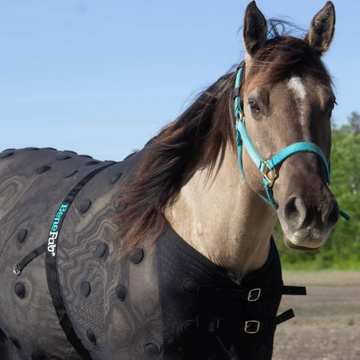
Spinal and Back Pain: Our Therapeutic Rejuvenate SmartScrim features ceramic-infused fabric, plus 80 medical-grade neodymium magnets over key acupuncture points for targeted stimulation. It targets not only the spine but also the hips and shoulders. This scrim harmonizes bodily functions safely and naturally, stimulating recovery time and ultimately reducing pain and stiffness.
Prevention and Long-Term Support
Although arthritis cannot be prevented entirely, good habits make a difference. Keep your horse at a healthy weight to reduce joint stress. Introduce training changes gradually and avoid heavy concussion on hard or uneven footing. Encouraging daily movement, even on rest days, supports joint health throughout a horse’s life.


