
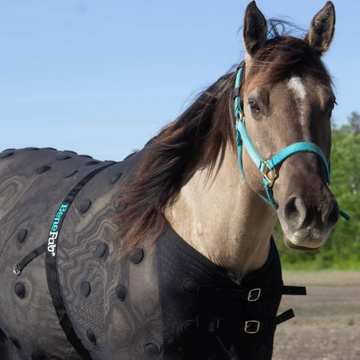



 Since the neck of the horse holds such high importance structurally and functionally, it is imperative to practice good maintenance routines to help keep those areas free of soreness, stiffness, or injury. The best method to use to keep your horse sound and pain free is to exercise preventative techniques. A proper preventative care regimen can include elements such as stretches, exercise and therapy.
Blog
Equine Skeletal Systems: The Horse’s Neck
Your horse's neck is an incredible system including over a hundred different muscles and seven large vertebrae. Regardless of the similarities, each horse has a different structure and unique posture - just like people. This causes variation in physical appearance, ability, and even, behavior.
Horses' daily routines include constant movement of their neck down to the ground and back up for grazing, which requires a significant amount of muscular support. In fact, much of the neck's mass is muscling, and makes up 6% of their body entire weight. In addition to the muscular support provided by the neck, it is also used as a balancing mechanism; a horse's head and neck position is directly related to their freedom of movement and weight distribution of the locomotor system.
Since the neck of the horse holds such high importance structurally and functionally, it is imperative to practice good maintenance routines to help keep those areas free of soreness, stiffness, or injury. The best method to use to keep your horse sound and pain free is to exercise preventative techniques. A proper preventative care regimen can include elements such as stretches, exercise and therapy.
Since the neck of the horse holds such high importance structurally and functionally, it is imperative to practice good maintenance routines to help keep those areas free of soreness, stiffness, or injury. The best method to use to keep your horse sound and pain free is to exercise preventative techniques. A proper preventative care regimen can include elements such as stretches, exercise and therapy.
Related Articles

Dog Grooming 101
Regular grooming is about more than keeping your dog looking their best—it supports healthy skin,...
Read more
Preventing Colic While Traveling
Hauling your horse during warm weather can increase the risk of dehydration, heat stress, electrolyte...
Read more
Home Remedies for Canine Seborrhea and Flaky Skin
Seborrhea in dogs can cause flaky, greasy, itchy, or irritated skin and may be linked...
Read more
Kissing Spine 101
Back pain in horses can appear in ways that are easy to overlook, from resistance...
Read more


