

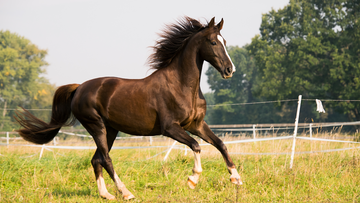
A strong and healthy topline is crucial for a horse's overall health and performance. The top line, which encompasses the muscles that run along the horse's spine from the withers to the croup, plays a vital role in supporting the rider's weight and maintaining proper balance. Working on horse topline exercises not only helps to improve the horse's appearance but also enhances its ability to perform various activities such as dressage, jumping, and endurance riding.
In order to develop and maintain a strong topline, it is essential to incorporate targeted exercises into the horse's regular training routine. These exercises should focus on engaging the horse's core and back muscles, promoting proper carriage, and encouraging the horse to stretch and work in an appropriate frame. By doing so, the horse will develop a well-rounded fitness, contributing to a more balanced, strong, and efficient stride.
Several effective exercises cater specifically to improving a horse's topline. Each exercise may vary in difficulty and intensity, allowing equestrians to choose those that best suit the needs and fitness levels of their horses. Incorporating these exercises into a consistent and balanced training program will help ensure that the horse maintains a healthy and robust topline throughout their life.
Understanding Horse Toplines
The topline of a horse refers to the muscles that run along the spine, from the neck to the hindquarters. It is an essential aspect of a horse's overall health, performance, and conformation. These muscles, including the longissimus dorsi, latissimus dorsi, and trapezius, support the vertebral column and play a significant role in various movements, including bending, flexing, and lifting.
Developing and maintaining a healthy topline is crucial as it strengthens the horse's back and improves balance and posture. A strong topline also enables the horse to distribute its weight more evenly, enhancing overall performance.
The vertebral column, or spine, comprises numerous vertebrae connecting the neck, withers, loin, croup, and hindquarters. Along with the muscle groups mentioned earlier, the neck, withers, and croup are relevant areas when assessing a horse's topline.
- Neck: The neck is an important aspect of the topline, as it helps control the movement and flexibility of a horse. Strong neck muscles contribute to a proper head and neck carriage which is vital for balance and athletic performance.
- Withers: The withers serve as a key reference point for saddle fitting and is the location where the neck and back merge. It plays a significant role in a horse's balance and distribution of weight.
- Croup: The croup is the area on the horse's back that lies between the loin and tail, consisting of the sacral and first few tail vertebrae. A well-developed croup can support hindquarter and overall back muscles, ultimately leading to better propulsion and power in movements.
To determine the state of a horse's topline, it is crucial to assess these areas along with the spine, and the loin and hindquarters' muscle development. Identifying weaker areas and implementing targeted exercises will allow a horse to achieve a more well-rounded and robust topline.
Exercise Regimes and Strategies
Incorporating various exercises into a horse's training routine is essential for developing a strong topline.
Long and low work is a foundation of dressage training and is particularly effective for topline strengthening. Encouraging the horse to stretch its neck and back while maintaining forward movement allows the muscles to engage and develop properly.
Transitions within and between gaits also have a significant impact on a horse's topline. By regularly practicing transitions, the horse is encouraged to shift its weight to the hindquarters, which engages the back and abdominal muscles. Incorporating these transitions throughout a training session can lead to significant improvement in a horse's carriage and balance.
Hill work is another effective approach for strengthening a horse's topline. By negotiating inclines and declines, the horse is forced to use its back, neck, and hindquarters muscles in coordination, leading to overall muscular development.
Lunging provides the horse with an opportunity to work on balance, rhythm, and flexibility without the interference of a rider's weight.
Pole work and cavalettis are useful additions to a horse's training routine. Ground poles and raised cavalettis engage the core, back, and neck muscles as the horse navigates the obstacles. These exercises can be completed in walk, trot, and canter to add variety and challenge the horse's coordination and muscle control.
Jumping exercises, such as cross rails, help build a horse's strength and power in the hindquarters, back, and abdominal muscles, as well as improving balance and responsiveness. Including jumping exercises in the training program benefits the horse's overall conditioning and contributes to topline development.
Stretching and Flexibility
 Stretching exercises are crucial for maintaining a horse's muscle elasticity and flexibility. These exercises can help prevent injuries, improve performance, and promote suppleness in the horse's body. Some common stretches include carrot stretches and back stretches. Carrot stretches are performed by encouraging the horse to bend its neck to reach a treat, such as a carrot, held near its body. This helps to stretch the neck muscles and increase flexibility. Back stretches encourage the horse to lift its back by applying gentle pressure to the belly. This helps maintain a strong and healthy back.
Flexibility is essential for a horse to perform at its best. When a horse has good flexibility, it can move more efficiently, reduce muscle tension, and minimize the risk of injury. Regular stretching exercises can significantly improve flexibility, as they help maintain muscle and joint suppleness.
To effectively incorporate stretching and flexibility exercises into a horse's routine, it's essential to approach them with patience and understanding. A horse must be comfortable and relaxed during the exercises, so it's crucial to pay attention to cues and adjust the intensity of the stretches accordingly. Gradually increasing the stretch length and duration over time allows the horse to build strength and flexibility safely.
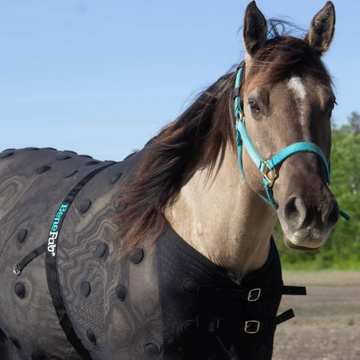
Don’t forget to ensure your horse's peak comfort between rides with the Benefab Smart Scrim. Get yours today and see the difference! Working on horse topline exercises not only helps to improve the horse's appearance but also enhances its ability to perform various activities such as dressage, jumping, and endurance riding.