
1-855-957-8378
Benefab®
Cart 0
  • Home
  • Shop

    Horse Products 16

    People Products 8

    Dog Products 5

    Bundles 5

  • Press
  • Blog
  • Pre-Loved
  • Dealers
  • Wishlist
  • Account
My Account
Log in Register
Australia (AUD $)
Belgium (EUR €)
Canada (CAD $)
Costa Rica (CRC ₡)
Czechia (CZK Kč)
France (EUR €)
Germany (EUR €)
Italy (EUR €)
Japan (JPY ¥)
New Zealand (NZD $)
United Kingdom (GBP £)
United States (USD $)
English
Benefab®
  • Shop

    Horse Products 16

    People Products 8

    Dog Products 5

    Bundles 5

  • Press
  • Blog
  • Pre-Loved
  • Dealers
Account Wishlist Cart 0

Search our store

Benefab®
Account Wishlist Cart 0
Home / Blog
Blog

Suspensory Ligament Injuries in Horses: Prevention, Care, and Recovery

Mar 23, 2023
Suspensory Ligament Injuries in Horses: Prevention, Care, and Recovery

Suspensory ligament horse injuries—often referred to as a suspensory sprain or suspensory desmitis—are caused by an overextension of the suspensory ligament and can be debilitating, as they’re a crucial part of how your horse moves. If your horse is in regular training or competition, you’ll want to learn the signs of a suspensory ligament injury so that you can intervene with healing protocol as soon as possible. 

What Are Suspensory Ligaments?

A ligament attaches two or more bones to the horse’s body. The suspensory ligament in horses is an important connective ligament between the cannon bone and the sesamoid bones at either side of the back of the horse’s fetlock and the pastern. The suspensory ligament is fibrous and strong but not very elastic. Therefore, it is prone to be injured not only by a one-time overextension but also by the buildup of mild overextension over time. 

What is Suspensory Desmitis? 

Suspensory desmitis in horses is essentially the spraining—or overextension to the point of injury—of the equine suspensory ligament. The sprain can include inflammation of the ligament and micro tears, and even more pronounced tears where the ligament meets the bones. However, complete rupture is uncommon and often seen in older broodmares (due to deterioration, not athletic injury). 

Recognizing a Suspensory Injury

Certain disciplines can put your horse at a higher risk of suspensory injury. Dressage, show jumping, eventing, racing, reining, and cutting all require precise movements and, in some cases, high speeds or impact. This stress on the joints, muscles, and ligaments increases the risk of injury.

Suspensory ligament injuries often build as slowly increasing lameness, and they’re often bilateral (meaning that both front or hind legs will sustain injuries around the same time). Suspensory injuries can also be acute (sudden, often caused by trauma) or chronic (degeneration over a long period of time)

While you might notice heat, swelling, and sensitivity when palpating the ligament, not all suspensory injuries have swelling. Some present with increasing lameness and thickening of the ligament. Symptoms can range from mild to severe, depending on the extent of the injury, and the sprain can be located on the top, middle, or bottom of the ligament, spanning much of your horse’s lower leg. In the rare case of a complete suspensory ligament rupture, you’ll notice the fetlock completely sink.

Diagnosing & Treating Suspensory Injuries

As with most injuries, the earlier you identify it, the better the recovery will be for your horse. If you suspect an injury, contact your veterinarian. Using a combination of flexion tests and ultrasound, they can identify pain, inflammation, tears, or ligament deterioration. Rest, anti-inflammatories, and supportive care are the most important for recovery. Most vets recommend stall rest or minimal turnout to reduce strain and inflammation.

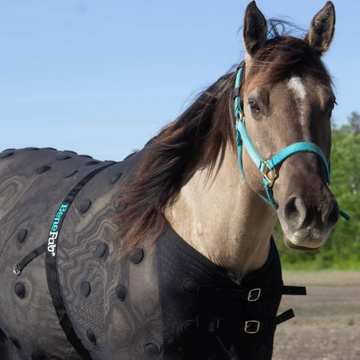
Shockwave and cold therapy can also be beneficial and are proven to reduce inflammation and pain. Other supportive therapies like the Benefab® Therapeutic Smart QuickWraps and the Benefab® Therapeutic SmartScrim can improve circulation and reduce inflammation. In severe cases, surgical intervention may be needed.

Previous
Natural Wound Care for Dogs with Essential Oils
Next
Edema in Horses: Causes + Treatment

Related Articles

Feeding a Show Heifer
December 03, 2025

Feeding a Show Heifer

Raising a competitive show heifer takes more than just good genetics and steady training. Feeding...
Read more
Natural Remedies for Canine UTIs
November 21, 2025

Natural Remedies for Canine UTIs

If your dog suddenly needs more walks, has accidents in the house, or seems uncomfortable...
Read more
What is a Cold Back Horse?
November 06, 2025

What is a Cold Back Horse?

A cold back horse often shows discomfort when pressure is applied to its back, particularly...
Read more
The Benefits of Bentonite Clay for Dogs
October 22, 2025

The Benefits of Bentonite Clay for Dogs

We all want our dogs to be happy and healthy, so it makes sense to...
Read more

Recent Posts

Feeding a Show Heifer
Natural Remedies for Canine UTIs
What is a Cold Back Horse?
The Benefits of Bentonite Clay for Dogs
Spine Problems in Dogs
Feeding a Show Steer
Can You Ride a Horse That Has Cellulitis Safely?
Cushing’s Disease Dog Diet
Showing Cattle Equipment: Your Guide for Competition
Treating Your Dog’s Ear Infection at Home

Focused &
Durable Designs

Products made specifically for you and your pets.

Free U.S. Shippingon All Orders over $200

We have you covered.

We Back Our
Products 100%

It's our customer promise.

BRAND PARTNERS

  • Become a Dealer
  • Become an Affiliate
  • Become a Registered Nonprofit
  • Logins for Dealer
  • Logins for Affiliate
  • Affiliate Resources
  • Meet our Ambassadors

CUSTOMER SERVICE

  • Contact
  • Shipping
  • Privacy Policy
  • Terms of Service
  • Money Back Guarantee
  • Warranty & Return Policy
  • Medical / Brand Disclaimer
  • FAQs

ABOUT BENEFAB

  • Why Choose Benefab?
  • The Benefab Story
  • Parables Podcast
  • Our Sister Brands
  • Media Inquiries
  • Blog
© 2013 -2025 Benefab®. Property of the Naar Boven Corporation. All rights reserved.
Payment options:
  • American Express
  • Apple Pay
  • Bancontact
  • Diners Club
  • Discover
  • Google Pay
  • Mastercard
  • PayPal
  • Shop Pay
  • Visa

Confirm your age

Are you 18 years old or older?

Come back when you're older

Sorry, the content of this store can't be seen by a younger audience. Come back when you're older.