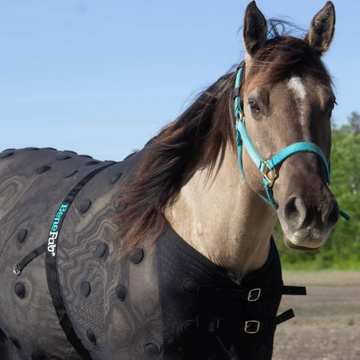
Mustang is the term used for free-roaming horses of the America West that were first descendants of Spanish, or Iberian horses that were brought to the Americas by Spanish explorers in the 16
th century. Mustangs are often referred to as wild horses, but because they are descended from once- domesticated horses, they are properly defined as feral horses. The original Mustangs were colonial Spanish horses, but as the regions of North America where they flourished were settled, they for the most part vanished.
Mustangs are a medium-sized breed of horse. They measure around 14 to 15 hands. They come in a variation of colors including the standard colors, bay, black, and chestnut. Have also been seen in pinto, white, spotted, dun-colored and buckskin color. Mustangs usually give birth to their foals in April, May, or early June. This gives the young horses time to grow before the cold months approach. Mustangs live in large herds. The herd consists of one stallion, around eight females and their young. Although separate herds have been known to blend when they are in danger.

Mustangs live in the grassland areas of the western United States. The Bureau of Land Management manages the U.S. mustang population and lets the horses run free on 34 million acres of public land.
States where Mustangs live:
- Montana
- Idaho
- Nevada
- Wyoming
- Utah
- Oregon
- California
- Arizona
- North Dakota
- New Mexico
Islands on the Atlantic Coast:
- Sable
- Shackleford
- Assateague
- Cumberland
Huge herds of wild horses did not pose a problem until the western United States became settled and cattle and other grazing animals were added to the range. The dry lands of the west could not support a large population of grazing animals. The population of Mustangs at the beginning of the twentieth century is estimated at two million. By 1926 the population had been halved. In 1971, Congress passed the
Wild Free-Roaming Horse and Burro Act which protected these animals.
The Department of the Interior, through the
Bureau of Land Management (BLM) and the Department of Agriculture, through the Forest Service, have the responsibility of administering this law. Under this protection the population of wild horses quickly grew during the 1970’s until control of their population became a major concern.
To maintain wild horses and burros in good condition and protect the health of our public lands, the BLM must manage the population growth of wild horse and burro herds. Without natural population controls, such as predation, herds can increase at a rate of up to 20 percent annually. They double in size in just 4 to 5 years, if not appropriately managed.
As a result, the Adopt A Horse program was begun in 1973 in the Pryor Mountains of Montana as a way to distribute the excess animals. Through the program excess animals are made available to the public at a cost of $125 for each horse or burro. Controversy has broken out over the U.S BLM practice of using helicopters to herd horses off public lands and sometimes permanently put them into holding facilities in an effort to control their population. These horses can be scared, stressed or sometimes injured and some could be sold off and sent to a slaughter house.
As well, controversy also surrounds the role horses have in the ecosystem as well as their rank in the prioritized use of public lands, particularly in relation to livestock. There are multiple viewpoints to each side of the spectrum. There are proven humane solutions that can applied today to help control wild horse populations numbers and keep wild horses wild and free.