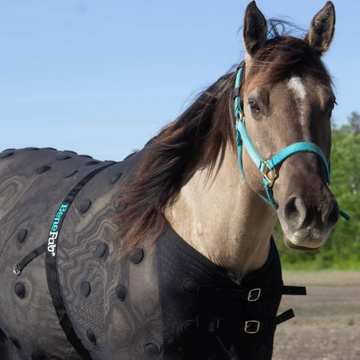


 Horses do not see the world in the same way we do. Literally. By studying the horse’s eye, we have an idea of how the horse sees the world and what it is capable of, but we do not know for sure. Compared to a human, the structure and position of the horse’s eye is different. This allows horses to see the world differently in terms of distance, position, color and vividness.
Color and Vividness
Many people believe that all animals are color blind. This is not true when it comes to the horse. A horse can see colors, although they are not as vivid as they are to us. The horse can only see two of the three visible wavelengths in the light spectrum, much like colorblind humans do.
Horses may not see colors as well as we do, but they have much better night vision than that of a human. The horse’s eye has more structures that pick up light than we do. This allows them to see better at night or in darker conditions. The tapetum lucidum is responsible for this. This membrane is located in the back of the horse’s eye. It reflects light and aids in night vision. However, horse’s have a harder time adjusting to light levels. For example, when you enter the barn at night and flip the lights on, you may notice your horse blinking for some time afterwards.
Distance and Position
As a prey animal, the horse must have good vision to take flight when they see a predator. A horse’s eyes are set on the side of their heads, which allows them to almost have a complete 360-degree vision. However, they do have blind spots, which do not let them to see directly in front or behind them. Horses also have good peripheral vision. With a slight turn of the head, a horse can focus on an object.
It is believed that horses see into the distance better than humans do. This is important when they are spotting predators before they become a threat.
Understanding the way your horse sees the world is very important. This will allow you to understand why a horse may spook or be overly interested in things. Try and see the world through your horse’s eyes.
For more information on a horse’s vision, visit: http://horses.about.com/od/understandinghorses/a/Understanding-How-Your-Horse-Sees.htm
Horses do not see the world in the same way we do. Literally. By studying the horse’s eye, we have an idea of how the horse sees the world and what it is capable of, but we do not know for sure. Compared to a human, the structure and position of the horse’s eye is different. This allows horses to see the world differently in terms of distance, position, color and vividness.
Color and Vividness
Many people believe that all animals are color blind. This is not true when it comes to the horse. A horse can see colors, although they are not as vivid as they are to us. The horse can only see two of the three visible wavelengths in the light spectrum, much like colorblind humans do.
Horses may not see colors as well as we do, but they have much better night vision than that of a human. The horse’s eye has more structures that pick up light than we do. This allows them to see better at night or in darker conditions. The tapetum lucidum is responsible for this. This membrane is located in the back of the horse’s eye. It reflects light and aids in night vision. However, horse’s have a harder time adjusting to light levels. For example, when you enter the barn at night and flip the lights on, you may notice your horse blinking for some time afterwards.
Distance and Position
As a prey animal, the horse must have good vision to take flight when they see a predator. A horse’s eyes are set on the side of their heads, which allows them to almost have a complete 360-degree vision. However, they do have blind spots, which do not let them to see directly in front or behind them. Horses also have good peripheral vision. With a slight turn of the head, a horse can focus on an object.
It is believed that horses see into the distance better than humans do. This is important when they are spotting predators before they become a threat.
Understanding the way your horse sees the world is very important. This will allow you to understand why a horse may spook or be overly interested in things. Try and see the world through your horse’s eyes.
For more information on a horse’s vision, visit: http://horses.about.com/od/understandinghorses/a/Understanding-How-Your-Horse-Sees.htm
Blog
Through the Eyes of Your Horse
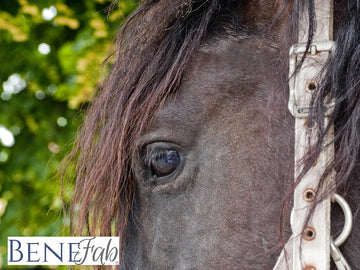 Horses do not see the world in the same way we do. Literally. By studying the horse’s eye, we have an idea of how the horse sees the world and what it is capable of, but we do not know for sure. Compared to a human, the structure and position of the horse’s eye is different. This allows horses to see the world differently in terms of distance, position, color and vividness.
Color and Vividness
Many people believe that all animals are color blind. This is not true when it comes to the horse. A horse can see colors, although they are not as vivid as they are to us. The horse can only see two of the three visible wavelengths in the light spectrum, much like colorblind humans do.
Horses may not see colors as well as we do, but they have much better night vision than that of a human. The horse’s eye has more structures that pick up light than we do. This allows them to see better at night or in darker conditions. The tapetum lucidum is responsible for this. This membrane is located in the back of the horse’s eye. It reflects light and aids in night vision. However, horse’s have a harder time adjusting to light levels. For example, when you enter the barn at night and flip the lights on, you may notice your horse blinking for some time afterwards.
Distance and Position
As a prey animal, the horse must have good vision to take flight when they see a predator. A horse’s eyes are set on the side of their heads, which allows them to almost have a complete 360-degree vision. However, they do have blind spots, which do not let them to see directly in front or behind them. Horses also have good peripheral vision. With a slight turn of the head, a horse can focus on an object.
It is believed that horses see into the distance better than humans do. This is important when they are spotting predators before they become a threat.
Understanding the way your horse sees the world is very important. This will allow you to understand why a horse may spook or be overly interested in things. Try and see the world through your horse’s eyes.
For more information on a horse’s vision, visit: http://horses.about.com/od/understandinghorses/a/Understanding-How-Your-Horse-Sees.htm
Horses do not see the world in the same way we do. Literally. By studying the horse’s eye, we have an idea of how the horse sees the world and what it is capable of, but we do not know for sure. Compared to a human, the structure and position of the horse’s eye is different. This allows horses to see the world differently in terms of distance, position, color and vividness.
Color and Vividness
Many people believe that all animals are color blind. This is not true when it comes to the horse. A horse can see colors, although they are not as vivid as they are to us. The horse can only see two of the three visible wavelengths in the light spectrum, much like colorblind humans do.
Horses may not see colors as well as we do, but they have much better night vision than that of a human. The horse’s eye has more structures that pick up light than we do. This allows them to see better at night or in darker conditions. The tapetum lucidum is responsible for this. This membrane is located in the back of the horse’s eye. It reflects light and aids in night vision. However, horse’s have a harder time adjusting to light levels. For example, when you enter the barn at night and flip the lights on, you may notice your horse blinking for some time afterwards.
Distance and Position
As a prey animal, the horse must have good vision to take flight when they see a predator. A horse’s eyes are set on the side of their heads, which allows them to almost have a complete 360-degree vision. However, they do have blind spots, which do not let them to see directly in front or behind them. Horses also have good peripheral vision. With a slight turn of the head, a horse can focus on an object.
It is believed that horses see into the distance better than humans do. This is important when they are spotting predators before they become a threat.
Understanding the way your horse sees the world is very important. This will allow you to understand why a horse may spook or be overly interested in things. Try and see the world through your horse’s eyes.
For more information on a horse’s vision, visit: http://horses.about.com/od/understandinghorses/a/Understanding-How-Your-Horse-Sees.htm
Related Articles

Feeding a Show Heifer
Raising a competitive show heifer takes more than just good genetics and steady training. Feeding...
Read more
Natural Remedies for Canine UTIs
If your dog suddenly needs more walks, has accidents in the house, or seems uncomfortable...
Read more
What is a Cold Back Horse?
A cold back horse often shows discomfort when pressure is applied to its back, particularly...
Read more
The Benefits of Bentonite Clay for Dogs
We all want our dogs to be happy and healthy, so it makes sense to...
Read more