





Maintaining a healthy weight is an important part of a horse’s overall health and well-being. A horse’s body condition affects comfort, performance, energy levels, and overall quality of life. One of the simplest and most effective ways to evaluate a horse’s health is through the use of a Body Condition Score (BCS). The BCS system was developed by Don R. Henneke and colleagues in 1983 as a method for evaluating the nutritional status and body fat of horses. Today, the system is widely used across all horse breeds and can be performed without any special equipment, making it a simple and effective tool for monitoring equine health and weight management.
A Body Condition Score is a system used to estimate the amount of fat coverage on a horse’s body. The scoring scale ranges from 1 to 9, with 1 being extremely thin and 9 being obese. Most healthy horses typically fall between a score of 4 and 6.
Horses with a BCS below 4 may not have enough body fat to maintain proper health. Low body condition can increase the risk of weakness, illness, poor performance, and difficulty maintaining body temperature. Regular monitoring helps identify weight loss early and allows feeding or management adjustments to be made before serious health issues develop.
The best way to determine a horse’s body condition is through both visual observation and physical touch. A horse’s hair coat can sometimes make the animal appear heavier than it actually is, so physically feeling different areas of the body is important.
Key areas to check include:
1. Ribs
2. Neck
3. Shoulders
4. Spine
5. Hips
6. Tailhead
Evaluating BCS
1. Score 1: Poor
· Severe emaciation
· No fatty tissue can be felt
· Ribs are highly visible and pronounced
· Bone structure is clearly noticeable throughout the body
2. Score 2: Very Thin
· Very thin appearance
· Ribs are clearly visible
· Vertebrae are easily seen
· Bone structure is noticeable throughout the body
3. Score 3: Thin
· Slight fat covering over the ribs
· Ribs can still be easily felt
· Tailhead remains noticeable and defined
4. Score 4: Moderately Thin
· Ribs can be faintly seen
· Slight ridge along the back (no positive crease)
· Fat is detectable around the tailhead
· Withers, shoulders, and neck are not noticeably thin
5. Score 5: Moderate
· Back appears level and smooth
· Ribs are not visible but can be easily felt
· Fat around the tailhead feels soft and slightly spongy
· Withers appear rounded
· Shoulders and neck blend smoothly into the body
6. Score 6: Moderate to Fleshy
· May show a slight crease along the back
· Fat over the ribs feels soft and somewhat spongy
· Fat around the tailhead feels soft
· Fat deposits are beginning to appear along the withers, behind the shoulders, and along the sides of the neck
7. Score 7: Fleshy
· Noticeable crease along the back
· Ribs can be felt with clear fat over them
· Fat around the tailhead feels soft
· Fat is deposited along the withers, behind the shoulders, and along the neck
8. Score 8: Fat
· Pronounced crease along the back
· Ribs are difficult to feel
· Fat around the tailhead feels soft
· Fat accumulation over the withers and behind the shoulders is present
· Noticeable thickening of the neck
· Fat deposits present along the inner buttocks
9. Score 9: Extremely Fat
· Clear, pronounced crease along the back
· Uneven patches of fat covering the ribs
· Large fat deposits around the tailhead, withers, behind the shoulders, and along the neck
· Fat present along the inner buttocks
· Flanks appear filled and level
If ribs are very easy to feel or clearly visible, the horse may have a body condition score under 4. If ribs cannot be felt and excessive fat deposits are present, the horse may be overweight. Scores of 7 and above are where the risk of laminitis and metabolic problems begins to climb, so a horse trending toward the higher end of the scale deserves just as much attention as one that is too thin.
Nutrition plays a major role in maintaining a healthy body condition. Most horses consume approximately 1.5%-2% of their body weight in feed each day. For example, a 1,000-pound horse may eat around 15-20 pounds of hay or forage daily depending on activity level and nutritional needs. Horses that struggle to maintain weight may require additional forage, grain, or dietary supplements.
Exercise also plays a major role in maintaining proper body condition. Horses that are ridden or worked regularly typically maintain healthier muscle tone and body fat levels. Horses with little activity may gain excess weight if feed intake is not adjusted appropriately. Obesity in horses can lead to serious health conditions such as laminitis, joint stress, and metabolic disorders. Monitoring body condition regularly helps prevent both underfeeding and overfeeding.
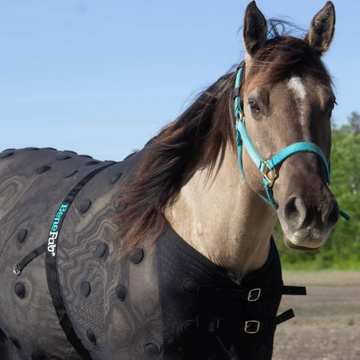
When a horse is being conditioned back up from a low score, or carefully worked down from an overweight one, supporting the body through the process matters too. Therapeutic tools that encourage circulation and muscle recovery, such as Benefab’s far-infrared products, can be a helpful complement to a thoughtful feeding and exercise plan as a horse rebuilds healthy condition and tone.
Regularly checking a horse’s Body Condition Score is a valuable management tool that helps support long-term health and proper nutrition. Using the Body Condition Score system provides a simple and reliable way to monitor a horse’s health, and consistent observation, proper nutrition, and appropriate exercise all work together to help horses maintain a healthy weight and live a healthier, more comfortable life.


