




Humans require approximately two to three hours of REM (Rapid Eye Movement) sleep each day. Horses, by comparison, require only 30 to 60 minutes daily. Despite the shorter duration, REM sleep remains essential to a horse’s physical health, recovery, and mental well-being.
REM sleep is the final stage of the sleep cycle and is often referred to as “paradoxical sleep” because brain activity during this phase is nearly as active as it is during wakefulness. Characterized by rapid eye movement beneath closed eyelids, REM sleep plays an important role in mental and physical restoration.
Unlike humans, horses must lie down to enter REM sleep. Adult horses generally sleep between 3 and 6 total hours within a 24-hour period, usually in multiple short intervals throughout the day and night. Because horses are polyphasic sleepers, their sleep cycles may last as little as 15 minutes at a time, though most deep and REM sleep occurs during the night when they feel safest and most relaxed. Young foals require considerably more rest- up to 12 hours of sleep daily and are especially vulnerable to the negative effects of sleep deprivation.
When horses are unable to lie down and achieve REM sleep for an extended period, sleep deprivation can develop. In severe cases, horses may experience “sleep attacks”, where extreme exhaustion causes them to suddenly doze off or collapse, potentially leading to injury and a decline in overall quality of life.
Signs of Sleep Deprivation in Horses
-
Decline in performance
-
Excessive daytime drowsiness
-
Reluctance to lie down
-
Episodes of uncontrollable sleepiness
-
Bruises or abrasions on the knees caused by collapsing while asleep
Common Causes of Sleep Deprivation
-
Feeling unsafe in their environment
-
Loneliness or separation anxiety
-
Transitioning to a new environment
-
Excessive nighttime noise
-
Inadequate bedding
-
Stalls that are too small
-
Pain, stiffness, or physical discomfort
Why Won't My Horse Lay Down?
There are several reasons why horses won’t lie down and sleep. Because horses are prey animals, they must feel completely safe and comfortable before entering REM sleep. Factors such as poor bedding, a stall that is too small, excessive noise, unfamiliar surroundings, or separation from companion horses can create stress and prevent a horse from fully relaxing. Physical discomfort, injury, arthritis, or muscle soreness may also make lying down more difficult. Changes in routine, travel, or environmental stress can further interfere with normal rest, increasing the risk of sleep deprivation over time.
If your horse is showing signs of sleep deprivation, it is important to consult an equine veterinarian or specialist for proper evaluation and diagnosis. Careful observation is one of the best ways to identify what may be causing stress or discomfort. Once the underlying issue is addressed, horses are often able to rest more comfortably and return to healthier sleep patterns.
What to Do If You Suspect a Sleep Issue
-
Observe your horse for 24-48 hours – watch for patterns such as reluctance to lie down, daytime drowsiness, stiffness, or unusual fatigue.
-
Evaluate the environment – check that your horse has clean, comfortable bedding, enough space to lie down safely, and a quiet, low-stressing setting.
-
Look for recent changes – consider whether changes in turnout, herd mates, travel, or routine may be affecting your horse’s sense of security.
-
Rule out pain or discomfort – conditions like arthritis, ulcers, back pain, or general soreness can make it difficult for horses to rest properly.
-
Consult a veterinarian if needed – if symptoms persist, worsen, or you notice signs of significant fatigue or instability, seek veterinary guidance as soon as possible.
How the Rejuvenate SmartScrim Can Help
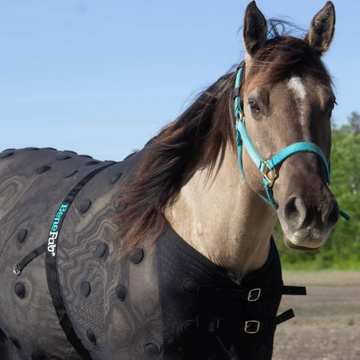
An added option that may help reduce your horses’ stress and promote relaxation is Benefab’s Rejuvenate SmartScrim. Designed with comfort and recovery in mind, the Smartscrim features 90 strategically placed magnets (1100 Gauss) positioned over key acupuncture points to provide targeted stimulation. Inspired by principles used in Chinese medicine, these magnetic therapy points are intended to encourage circulation and support the body’s natural recovery processes. By helping draw blood flow to targeted areas, the magnets may assist in maintaining continued stimulation even after the Smartscrim has been removed.
Each magnet is enclosed within a soft cushion to ensure comfort while worn, making the Smartscrim suitable for use in the stall, during travel, after exercise, or while resting. The sheet is designed to work in harmony with the horse’s body by promoting circulation, increasing oxygen flow to muscles and tissues, reducing stiffness, and supporting faster recovery. For horses dealing with stress, soreness, or discomfort that may interfere with proper rest, The SmartScrim can provide soothing support while encouraging relaxation and overall wellness.


