
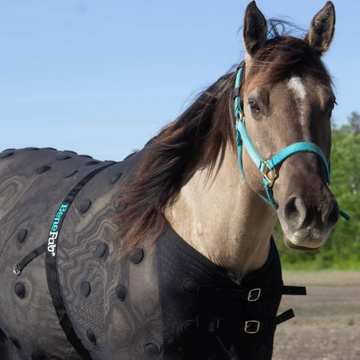





Most injections are given by a veterinarian, but there are times when horse owners need to give medications at home. If your veterinarian has instructed you to give an intramuscular (IM) injection, it’s important to know where to inject and how to do it safely. Giving an injection correctly helps the medication work properly while reducing the chance of soreness, swelling, or injury.
An intramuscular injection is given deep into a large muscle. Horses have several muscles that are safe to use because they are large enough to absorb the medication and are located away from major nerves, bones, and blood vessels. Choosing the correct injection site is one of the most important parts of giving an IM injection.
Base of the Neck
The base of the neck is the most common injection site and is usually the easiest for horse owners to use. It allows you to stand beside the horse’s shoulder, which is one of the safest places to be if the horse becomes startled.
To find the correct location, place the heel of your hand where the horse’s neck meets the shoulder. The area covered by your hand is generally the safest place to give the injection. Avoid injecting too high along the crest of the neck or too low near the throat.
Pectoral Muscles
The pectoral muscles are located in the horse’s chest—between the front legs. This site is often used if the horse’s neck is sore from previous injections or if several injections have been given over a period of time.
One advantage of this area is that it drains well if swelling or an abscess develops. The downside is that you must stand closer to the front of the horse, so it’s important to make sure the horse is standing quietly before giving the injection.
Buttocks
The muscles of the hindquarters are another option for IM injections. Since these muscles are used every time the horse walks, they tend to work out soreness more quickly than some other areas.
The biggest disadvantage is that you are working within kicking range. If your horse is nervous or doesn’t like needles, this may not be the safest place to give an injection. To find the correct spot, locate the point of the hip and move about an inch below it into the large muscle on the back of the upper leg.
Top of the Rump
The top of the rump is another commonly used injection site. It allows the person giving the injection to stay in a fairly safe position, but it does have one drawback. If an abscess develops, this area does not drain well, making infections more difficult to treat.
Before You Give the Injection
Before giving an intramuscular injection, make sure you have the correct medication, dosage, and supplies. Taking a few minutes to prepare can make the process safer for both you and your horse.
Tips for a Safe Injection:
-
Always use a new, sterile needle and syringe for every injection.
-
Read the medication label carefully and verify the correct dosage with a veterinarian before administering it.
-
Follow your veterinarian’s recommendations for the proper needle size, injection technique, and injection site.
-
Never inject into an area that is swollen, sore, or showing signs of infection.
-
If your horse needs multiple injections over several days, rotate injection sites to help reduce soreness and irritation.
-
After inserting the needle, pull back slightly on the plunger before injecting the medication. If blood appears in the syringe, remove the needle, discard it, and use a sterile needle in a different injection site.
-
Pay attention to your horse’s behavior. If your horse is anxious, difficult to handle, or you’re not comfortable giving the injection, ask an experienced horse person or your veterinarian for assistance.
-
Pro-tip: If injecting in the neck muscle, turning the horse's head slightly toward you, will help relax the muscle so that the needle enters and moves smoothly—reducing pain for the animal and making your job a bit easier!
-
Dispose of used needles and syringes in an approved sharps container.
-
Monitor the injection site over the next few days. Mild tenderness is normal, but swelling, heat, drainage, or increasing pain should be reported to your veterinarian.
Consider Your Horse’s Temperament
Every horse reacts differently to injections. Some stand quietly while others become nervous as soon as they see a needle. Knowing how your horse is likely to react can help make the experience safer for everyone.
If your horse has a history of being difficult during injections, don’t try to force the situation. Ask an experienced horse handler to help or have your veterinarian administer the medication if needed. Staying calm and working patiently is always better than rushing and risking injury.
When administering an intramuscular injection it is a responsibility that should never be taken lightly. While many horse owners successfully give prescribed injections at home, proper technique, careful site selection, and attention to safety are essential. Always work under your veterinarian’s guidance, use sterile equipment, and monitor your horse afterward for any signs of swelling, pain, heat, or an adverse reaction.
When done correctly, IM injections are a safe, and effective way to deliver medications that help keep your horse healthy and comfortable.


