
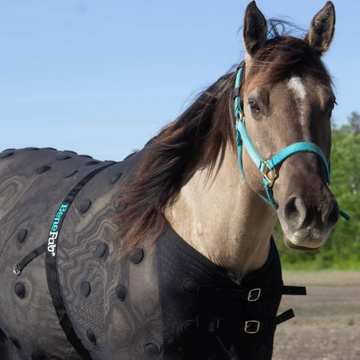




With a proud, Spanish aura, a Paso Fino brings rider comfort to the next level with their unique, quick-stepping gaits.
With a name quite literally translating to “fine step,” the Paso Fino’s special talents come into focus almost immediately.
To an untrained eye, a Paso Fino’s natural quick-stepping gait may appear frantic and tiring. But with a little understanding, it becomes clear why this breed was developed and its gaits curated.
Breed Origination

According to the United States Equestrian Federation (USEF), The Paso Fino’s journey began when horses were imported to horseless North America more than 500 years ago. Spanish conquistadors brought Andalusians, Spanish Barbs, and now-extinct Spanish Jennets to the new World for assistance in conquering the expansive lands.
The conquistadors needed horses with strong hooves, a smooth gait and superior hardiness to ride as they traveled across the Americas, sometimes traveling more than 100 miles per day.
By crossing the Andalusians and Spanish Jennets, horses with a natural, four-beat gait began to emerge. Easy keepers with arched, proud necks, the Paso Fino was born. According to USEF, the breed flourished throughout Puerto Rico, Columbia, Cuba, Dominican Republic, Aruba and Venezuela.
The Paso Fino gained inter-continental awareness when United States servicemen encountered them during their time stationed in Latin America during World War Two. The importation of Paso Finos to the United States began after WWII in the 1940s.
Dubbed the ‘melting pot’ for Paso Finos, the U.S. had Paso Finos coming from everywhere in Latin America, blending the best of bloodlines primarily from Puerto Rico and Colombia.
Seeing the need for breed continuity and welfare, the Paso Fino Horse Association (PFHA) was developed in 1972. According to their website, the PFHA has an ambitious mission.
“The Mission of the Paso Fino Horse Association to protect and promote the best interests and welfare of the Paso Fino horse; to protect and maintain the integrity of the Registry, and the natural characteristics and heritage of the Paso Fino horse; promote and enhance the appeal and versatility of the Paso Fino horse; and provide and support member services.”
The PFHA registers horses internationally, and DNA tests for breed verification. Based in Lexington, Kentucky, the association seeks to promote the breed through shows, clinics and informational publications such as the Paso Fino Horse World Magazine.
Breed characteristics
The Paso Fino is widely known as being the smoothest ride around. There are tales of riders being able to carry a full glass of water while in the saddle, never spilling a drop.
Their signature gait, called the “Classic Fino,” is a series of rhythmic four-beat footfalls, with each foot barely skimming the ground before snapping back into regal positioning.
According to the USEF, the gait is smooth, purposeful, straight, balanced and synchronous front to rear. The horse shows athletic collection, with their neck gracefully arched, chin tucked and haunches squarely beneath them, powering the visual motor that is a Paso Fino in motion.
While four hooves falling at different times may sound jarring and uncomfortable, the Paso Fino’s footfalls are so closely synchronized that a rider feels little to no interruption in their seat as they glide forward on their horse. When watching competitors, there should be no noticeable movement in the rider’s head or Paso Fino’s croup.
The Paso Fino has three speeds of their unique gait, which have varying amounts of collection and are called upon in different competitions.
- Classic Fino – As its name suggests, the Classic Fino is the most traditional gait and exhibits the most collection, with the horse moving forward at the slowest rate.
- Paso Corto – This gait is considered the moderate gait, with ground-covering yet unhurried footfalls.
- Paso Largo – This is the fastest speed of the Paso Fino four-beat gait. There is a longer extension of stride and less collection although a Paso Fino should never become strung out or unbalanced while moving.
Paso Finos can also perform other gaits that are natural to horses such as the walt, trot and canter. They are described as a highly sensitive breed with intelligence that makes them easily trainable.
The Breed Today
The PFHA boasts more than 60,000 registered horses and 3,500 members. Shows scattered across 21 regions see competitors accumulate points to qualify for the Grand National Championship Show, held in the fall in Florida where riders can enter pleasure, driving, trail, costume and jumping classes.


